
The Neural Glow Up: Why Your Brain Craves Pilates (And What Happens When You Listen)
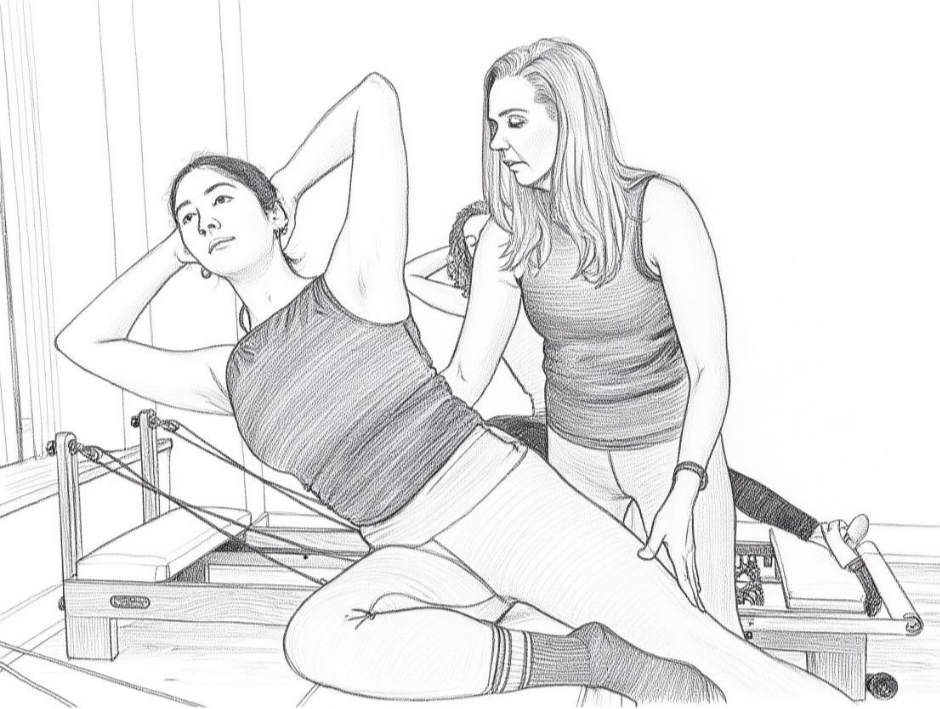
Let's be honest… you've tried everything. The trendy workouts, the brand name gyms, the 5 AM boot camps that left you exhausted but somehow still stressed. You know what a strong core looks like. But here's what nobody talks about, the most transformative thing happening in your Pilates practice isn't visible in the mirror at all.
It's happening in your brain.
Every precise movement, every intentional breath, every moment of presence on the reformer is quietly rewiring your nervous system, building neural pathways that make you sharper at work, calmer in chaos, and more embodied in every aspect of your life. This is the mind-body connection everyone talks about but few truly understand. And once you tap into it, everything changes.
At KIN Kollective, we're not just sculpting bodies. We're recalibrating nervous systems. Here's the neuroscience behind why that matters, and why it might be exactly what your overstimulated, over-scheduled life has been missing.
Your Nervous System Needs This (More Than Another Adaptogen Latte)
Here's what's actually happening when you're holding that shaky plank on the reformer, wondering if you can make it through the next five breaths: your brain is literally forming new neural connections. This isn't metaphorical. It's neuroscience.
Your brain and muscles are in constant conversation, an intricate dialogue between your nervous system and your musculoskeletal system. Every movement you make travels along neural pathways, like tiny highways of information telling your body how to move, when to stabilize, where to engage.
But here's what makes Pilates different from your cycle phase or that brief flirtation with CrossFit, it demands your complete presence. You can't scroll through your mind's to-do list while maintaining pelvic stability on the reformer. You can't dissociate from your body while controlling a slow, deliberate extension. This focused attention is what neurologists call active neuroplasticity, your brain's extraordinary ability to rewire itself, to build new pathways, to literally change its structure.
Think of it this way, every time you practice a movement with intention (not just going through the motions), you're not merely toning a muscle. You're training your entire nervous system to fire more efficiently, to communicate more clearly, to move with what we call somatic intelligence.
This is why you walk out of class feeling different, not just worked out, but somehow recalibrated.
Proprioception: The Sixth Sense You Didn't Know You Were Missing
Quick quiz: when was the last time you felt truly in your body? Not thinking about it, not judging it, not planning what you'll do to it next, but actually inhabiting it?
If you're drawing a blank, you're not alone. Most of us spend our days dissociated from our bodies, living entirely in our heads, navigating back-to-back Zoom calls and endless mental tabs. But Pilates trains something called proprioception, your body's innate ability to sense where it is in space, and it's quietly revolutionary.
This isn't just about nailing that challenging Tower sequence (though that's satisfying too). Proprioception is what allows you to:
Catch yourself before you twist your ankle on those uneven West Village cobblestones
Maintain your balance in 4 inch Manolos while navigating a packed subway car
Sit through a 3 hour board meeting without your lower back staging a revolt
Carry your Whole Foods haul up four flights of stairs without throwing out your shoulder
Pilates trains proprioception through thousands of micro-adjustments. Every time you're balancing, flowing through a sequence, or controlling resistance through springs, your brain is receiving constant sensory feedback. Over time, this input becomes incredibly refined. Your body develops a sixth sense about itself, a deep, intuitive awareness that allows you to move through the world with more grace and far less injury.
It's the difference between walking through life and gliding through it.
The Mind-Body Feedback Loop (Or: Why Your Therapist Keeps Recommending Somatic Work)
You know that feeling when you're trying to meditate but your mind won't stop spinning? When you're attempting a calming breath exercise but you're mentally drafting emails? This is where Pilates becomes unexpectedly profound.
What makes Pilates uniquely effective isn't just the physical challenge, it's the continuous feedback loop it creates between your mind and body. Unlike exercises where you can mentally check out and let your body go on autopilot, Pilates requires sustained, focused attention. You have to be present, or the movement simply doesn't work.
This focused awareness activates your prefrontal cortex, the part of your brain responsible for executive function, emotional regulation, and what neuroscientists call "cognitive control." Basically, it's the grown-up part of your brain that helps you not react when someone steals your taxi or sends that passive-aggressive Slack message.
But here's what's fascinating: this mental engagement doesn't just make you better at Pilates. Research shows that mind-body practices can improve cognitive function, reduce anxiety, enhance decision-making, and increase emotional resilience. When you train your brain to stay present during challenging movements, you're literally building the same neural pathways that help you stay centered during a difficult conversation with your teenager, remain calm during a high-stakes presentation, or navigate family dynamics over the holidays without losing your mind.
The breath work woven into every class amplifies this effect. Controlled breathing activates your parasympathetic nervous system, your body's built-in anti-anxiety mechanism. This is what finally down-regulates that constant low-level stress response you've been living with since 2020, lowers cortisol, and creates a sense of spaciousness that extends far beyond the studio.
Think of it as nervous system hygiene. Just like you wouldn't skip washing your face, why would you skip recalibrating your stress response?
Movement Intelligence: Training Your Body to Be Smarter, Not Just Stronger
Let's talk about why traditional fitness has failed you.
Most workouts focus on isolating muscles, bicep curls, leg presses, endless crunches that leave you sore but somehow still slouching at your desk. But your body doesn't move in isolation. It moves as an exquisitely coordinated system, with muscles working together in sophisticated patterns that took millions of years of evolution to perfect.
This is where Pilates is genuinely different. It teaches motor learning, essentially, training your body to move as an integrated whole. When you perform something like the Long Stretch on the reformer, you're not just "working your core." You're training:
Core stability while your limbs move independently
Shoulder girdle control and scapular mobility
Spinal articulation and dynamic alignment
Breath coordination synchronized with movement
Total-body integration that mirrors how you actually move through life
This type of functional training creates what neuroscientists call motor engrams: think of them as movement blueprints stored in your brain. The more you practice these integrated patterns, the more automatic they become. Eventually, your body just knows how to stabilize your core when you're picking up your toddler (or your overstuffed work bag), or how to maintain spinal alignment when you're hunched over spreadsheets.
This is movement intelligence. And it's precisely what allows you to move through your demanding life with more ease, less compensation, and significantly less pain.
You're not just getting stronger. You're getting smarter about how you use your body.
What Actually Changes: The Invisible Upgrades That Transform Everything
So what does all this neural rewiring actually look like in your real, messy, beautiful life? This is where the science becomes deeply personal:
Effortless Posture (Finally)
You know that moment when you catch your reflection in a store window and barely recognize your own silhouette? As your nervous system learns to recruit deep stabilizing muscles efficiently, good posture stops being something you have to constantly think about. Your body naturally finds alignment because you've literally rewired the neural pathways that support it. You walk taller without trying. You sit at your desk without collapsing. You look poised even when you feel chaotic.
Pain That Finally Quiets
When your brain and body communicate with more sophistication, you move with precision instead of compensation. This means fewer injuries from poor movement patterns, less chronic pain from muscular imbalances, and significantly fewer trips to your orthopedist, physical therapist, or acupuncturist. Your body stops being something that constantly needs fixing.
The Balance You've Been Seeking (Literally)
Enhanced proprioception and motor control translate to better balance in everything, whether you're hiking in the Catskills, chasing your kids through Prospect Park, navigating icy February sidewalks in impractical shoes, or simply aging with more grace and less fear of falling.
Body Awareness That Feels Like Coming Home
You start to notice when you're holding tension in your jaw during a tense meeting. When you're collapsing into one hip while waiting for coffee. When you're clenching your shoulders up around your ears on a deadline. This awareness isn't judgmental, it's informative. And it's the first step toward actually changing these patterns instead of just being exhausted by them.
Stress Resilience (The Real Kind)
That focus and breath control you practice in class? It becomes a tool you can access anywhere. Stuck in bumper-to-bumper traffic on the FDR? Nervous before a difficult conversation? Overwhelmed by the sheer volume of everything? Your nervous system already knows how to find regulation. You've trained for this.
Enhanced Performance in Everything Else
If you run, play tennis, ski, or practice any sport, the motor control and body awareness you develop through Pilates makes you measurably better. More efficient. More powerful. Less prone to injury. Your weekend warrior days just got an upgrade.
The Cognitive Edge
Here's the part that surprised researchers: the concentration required in Pilates improves focus, working memory, and mental clarity in ways that extend well beyond the studio. You're sharper in meetings. More present with your family. Better able to context-switch without losing your mind. In a world that's constantly demanding your attention, this might be the most valuable benefit of all.
The KIN Difference: When You Know the "Why," Everything Changes
Here's what we don't do at KIN Kollective: mindlessly count reps. Push you until you can't move. Shame you for not being "advanced enough." Create arbitrary fitness goals that have nothing to do with how you actually want to live your life.
What we do instead: teach you the neuroscience behind what you're doing. When you understand why you're maintaining a neutral spine, why we obsess over breath-to-movement coordination, why precision trumps speed every single time, the practice transforms from exercise into embodied intelligence.
This is what our clients mean when they say Pilates at KIN "feels different." You're not just following instructions. You're actively participating in your body's recalibration. You're learning a language of movement that serves you everywhere, in the studio, yes, but also in the rest of your demanding, nuanced, multi-dimensional life.
Every class becomes an opportunity to refine the conversation between your brain and body. We've created an environment where you can actually slow down (revolutionary, we know), tune in, and build neural pathways that support you in every moment, not just the 45 minutes you spend on the reformer.
And perhaps most importantly: you're not doing this alone. You're joining a collective of intelligent, intentional people who understand that strength isn't about punishment. It's about presence
Coming Home to Your Body (The Return You Didn't Know You Were Seeking)
Movement is a language, and most of us have forgotten how to speak it. We've spent so long living in our heads, achieving, planning, optimizing, performing, that we've lost touch with the brilliant intelligence of our bodies.
Pilates teaches you to speak this language fluently again. It's not about achieving some impossible standard or looking a certain way. It's about building a relationship with your body based on awareness, respect, and deep listening.
The neural connections you create on the reformer, the proprioceptive awareness you develop on the Tower, the breath patterns you integrate into every movement: these aren't just studio skills. They're life skills. They're the foundation that allows you to move through your days with more strength, more ease, and more embodied presence.
Because here's the truth that the fitness industry doesn't want you to know: Pilates isn't about how your body looks. It's about how your body feels. How it moves. How it supports you in being fully alive, not in some aspirational future, but right now, in this moment, in this body, in this beautifully complicated life you're actually living.
This is the mind-body connection. Not as a concept, but as a lived experience. Not as something you achieve, but as something you return to, again and again, every time you step onto the mat.
Welcome home.
Ready to experience what happens when your brain and body finally start speaking the same language? Join us at KIN Kollective. Your nervous system has been waiting for this.
Grab Simple Start Plan Here →
Simple Start Plan: 3 Classes + 2 guest for $89